
Here Are 5 Ways Students Can Stay Productive During the Summer Break
From not having homework to worry about and sleeping in on weekdays to hanging out with friends all day and going on family trips, summertime is easily every student's favorite time of the year. But just because you are bent on having fun under the sun does not mean learning has to take a back seat. After all, there are plenty of ways students can stay productive during the summer break and prevent learning loss while still having the best time.

1. Why Summer Matters for Students
We all equate summer as a time of fun and relaxation, two things that both students and teachers alike look forward to after a full year of grueling schoolwork. Studies show that taking a break is extremely important for one's mental and physical health, reducing stress, and improving productivity. For students, summertime allows them to recharge and recover from the stress and anxiety that often come with their studies. This much-needed rest is vital in maintaining a student's energy, motivation, and interest in school.
But as much as you would like to stay up late playing video games all summer long, being productive is also essential if you want to hit the ground running when fall rolls in. It is important to sustain learning and remember what you studied the previous year. This keeps you from slipping into the dreaded summer slide and helps you transition smoothly into the new school year.
If you are a high school sophomore or junior, your summer break can also be a great time to consider your college options. You may not be starting your application process just yet, but it is never too early to make a list of schools you are interested in, research programs you are curious about, or take part in extracurricular activities that can help boost your application.
The summer slide is real. Research shows students can lose up to two months of grade-level knowledge over an unstructured summer break. Even a few hours of intentional learning each week is enough to prevent this from happening.
Summer is all about fun and excitement, but it is also an important time for students who want to stay or get ahead of their studies. So if you are looking for ways students can stay productive during the summer break, we have got you covered.
2. Take Up a New Hobby
With no strict schedules to follow, summer is the best time to engage in new hobbies or learn something new. Technology has made it incredibly easy to learn new skills. You do not always need to go out of your way or spend a lot of money to access tutorials, online classes, and other resources.
Learn a new language - There are free apps that make daily language practice fun, engaging, and habit-forming with just a few minutes a day.
Cooking or baking - Free cooking videos are just a click away. Recipes also naturally teach fractions, ratios, and even basic chemistry.
Coding with Scratch - Scratch, developed by MIT Media Lab, teaches programming to students as young as eight through interactive stories, games, and animations.
Creative arts - Dance, music, writing, and visual art all build skills that are valued in school and in future careers.
The key is to pick something that genuinely excites you. When learning feels like play, it sticks, and that is exactly the kind of engagement that builds lasting confidence.
3. Refine Your Existing Skills
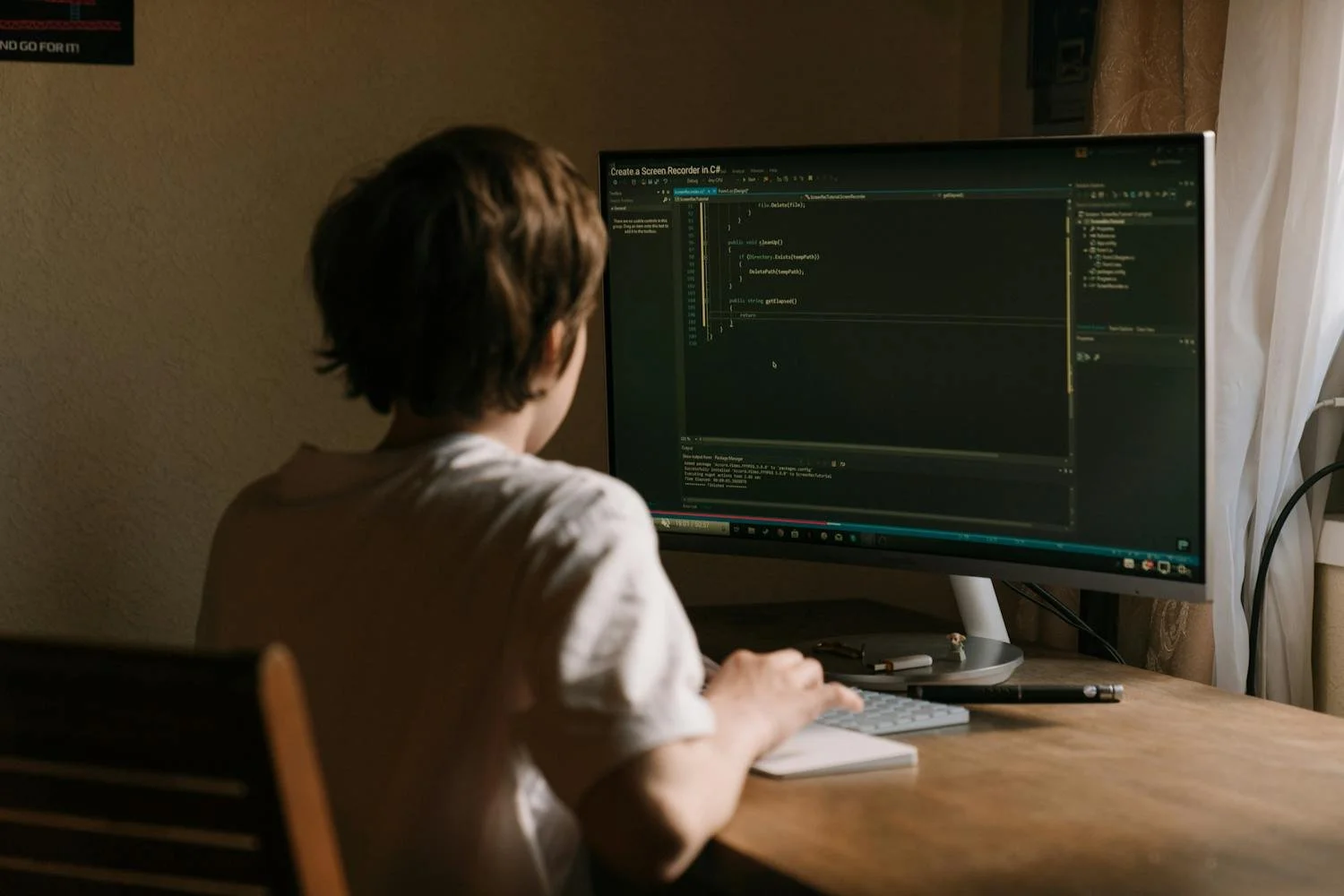
Whether you want to hone your creativity and writing style, express yourself through dance, art, or music, or dream of becoming a game designer one day, there are plenty of summer classes you can be part of to further improve your talents and skills. This is something you should especially consider if your skills and interests align with the college major and career you would like to pursue in the future.
You can also take this time to explore interests that are not typically offered or included in your regular school curriculum. Perhaps your computer or design class inspired you to learn more about web development or graphic design. Your summer break gives you a chance to build and expand on the new skills you learned in school and explore other ways to improve your talents.
Pro tip: Free platforms like Figma, Khan Academy, and freeCodeCamp let you explore web development, graphic design, and computer science at your own pace, with no cost and no schedule constraints.
3. Practice Your STEM Skills with Activities and Experiments at Home
If you are a parent, you know it would be next to impossible to tear children away from their video games just so they could review their lessons from the past year. Especially if it involves subjects that most students struggle with, like math and science. Here at Stemly, we already know how fun and exciting math and science learning can be, but we understand that not many students think the same way. At least, not at first.
One of the best ways students can stay productive during the summer break is through activities that engage their minds and encourage their natural curiosity. That is where STEM activities come in. You can find plenty of age-appropriate DIY science experiments and challenges online that you can do with your child, such as the cool activities from Do Try This at Home by the Institute of Physics. Not only are you helping to hone your child's critical thinking skills, but you are also developing their love for math and science and limiting their screen time.
DIY science experiments - Volcano projects, baking soda rockets, and water filtration builds make chemistry tangible and fun at home.
Math games and puzzles - Sudoku, strategy board games, and logic puzzles strengthen mathematical reasoning without feeling like studying.
Gardening projects - Planting a garden teaches biology, soil chemistry, and environmental science while spending time outdoors.
Building and engineering - LEGO challenges and bridge-building contests with popsicle sticks teach structural and engineering thinking.
4. Go Over Your Lessons from the Previous Year with a Tutor
Successfully completing the previous year's classes certainly adds a feather to your cap, but remembering to apply what you have learned to your future lessons is another story. In other words, just because your Algebra 1 class is over does not mean you can forget about linear equations and graphs, especially with Algebra 2 on the horizon. Granted, reviewing your lessons from the previous school year may not be your idea of the perfect summer activity. Still, it is a crucial step if you want to get a leg up when fall comes.
We understand that the motivation to study in the middle of your summer break is hard to come by, so it is best to consider working with an expert tutor who understands your needs and how to address them, notably in subjects like math and science which many students often struggle with.
Stemly's math and science tutoring is designed to help students learn exactly what they need to know and address areas where they have the most difficulty in a fun and engaging way. Our math and science tutors can help you review your past lessons and make sure you fully understand the concepts before moving on to the next topic. By strengthening your fundamental knowledge and skills, you are more prepared to tackle more advanced math and science content.
Why summer tutoring works: Without the pressure of classroom deadlines or peer comparison, summer is one of the best times to go back, fill gaps, and truly understand the concepts that were rushed through during the school year.
5. Get a Headstart for the Next School Year

It is not uncommon for some students to suddenly struggle in a subject they used to do well in. Take students introduced to algebraic concepts for the first time as an example. Before taking a pre-algebra class, a student's experience with math will typically only involve arithmetic, which makes understanding unfamiliar algebraic concepts challenging. This is also true for science subjects like biology, chemistry, and physics. While these subjects often have topics that overlap, they also require students to grasp different concepts and skills.
It goes without saying that as you progress through school, the skills needed to meet your new curriculum's demands also increase. Familiarizing yourself with the course material will allow you to jump right into learning once school resumes and ensure you do not encounter the same struggles you may have had in the previous year. One way to do this is by working with a math and science tutor who can guide and support you in your learning journey.
Stemly's math and science tutors specialize in teaching STEM subjects to students of all ages. Our tutors assess your skills and identify the gaps in your learning. We design our tutoring plans based on your current level of learning to ensure that all areas of need are addressed, setting you up for success in your academic journey. And because all our math and science tutoring is done online, you have the flexibility of learning anytime, anywhere. That means you do not need to cancel any of your planned summer activities or worry about fitting your lessons into your vacation schedule.
7. Passive vs. Active Summer Learning
Not all summer learning is created equal. Here's a breakdown of how passive habits compare to active strategies when it comes to actual retention and long-term academic outcomes.
| Aspect | Passive Summer Learning | Active Summer Learning |
|---|---|---|
| Engagement | Watching educational videos or shows | Conducting hands-on experiments at home |
| Skill Building | Reading about coding concepts | Writing a simple program or building a game on Scratch |
| Retention | Low. Information fades quickly without practice. | High. Concepts stick through repeated application. |
| Confidence | Superficial familiarity with ideas | Real problem-solving experience builds self-belief |
| College Prep | Limited. Does not add to portfolio. | Projects, skills, and tutoring progress are portfolio-worthy |
| Fall Readiness | Summer slide likely without reinforcement | Students return prepared, confident, and ahead of the curve |
8. Support Strategies for Parents and Families
Parents play a critical role in making summer productive and enjoyable for students. Here are a few actionable strategies that make a real difference:
Encourage curiosity - Answer your child's questions by exploring them together rather than just looking up the answer. Curiosity is the foundation of STEM thinking.
Provide STEM resources - STEM kits, coding platforms, and educational games turn screen time into meaningful learning time at home.
Celebrate effort, not just results - Praising persistence over performance builds a growth mindset that lasts well beyond summer break.
Seek help early - If your child consistently struggles in math or science, connecting with a tutor before fall begins leads to better, faster outcomes.
9. FAQs
Q1: What are the best ways students can stay productive during summer break?
The most effective ways include taking up a new hobby, refining existing skills, doing hands-on STEM activities at home, reviewing past lessons with a tutor, and getting a headstart on next year's coursework. The key is to stay engaged without burning out.
Q2: What is the summer slide and how can students avoid it?
The summer slide refers to the learning loss students experience over an unstructured summer break. Research shows students can lose up to two months of grade-level knowledge. Regular reading, STEM activities, and working with a tutor are among the most effective ways to prevent it.
Q3: What STEM activities can students do at home during summer?
Simple activities like DIY science experiments, math puzzles, gardening, building projects, and coding on platforms like Scratch are all excellent options. They are low-cost, engaging, and build the critical thinking skills students need for the school year ahead.
Q4: Is summer tutoring worth it?
Yes. Summer tutoring gives students the time and space to revisit challenging concepts without classroom pressure. It fills foundational gaps before they become bigger problems and helps students return to school feeling confident and prepared.
Q5: Can Stemly tutor my child during summer without disrupting our vacation plans?
Yes. All of Stemly's math and science tutoring is done online, giving students the flexibility to learn anytime, anywhere. Sessions can be scheduled around family trips and summer activities so learning fits into your summer, not the other way around.
10. Next Steps
Summer break is a window of opportunity that passes quickly. The most successful students do not spend it entirely idle. They explore new interests, deepen existing skills, and shore up the weak spots that could hold them back in the fall.
Whether it is picking up coding, doing DIY science experiments, or working through last year's algebra with a patient tutor, every productive hour this summer is an investment in a stronger, more confident school year ahead.
Ready to give your student the best possible summer? Reach out to Stemly today to learn more about math tutoring, physics tutoring, chemistry tutoring, and biology tutoring services designed around your student's specific needs and goals.
Book a free consultation and get matched with an expert tutor who will build a personalized summer learning plan that fits your schedule and goals.