
Why Biology Builds Foundational STEM Skills
Biology is often the very first science course that students take when they enter high school. While it is easy to think of it as just a class about plants and animals, biology is actually the gateway to the entire world of STEM. It is a subject that asks you to look at the invisible world of cells and the massive world of ecosystems and see the patterns that connect them. When you study biology, you are not just learning facts; you are learning how to process complex information and solve problems that affect every living thing on Earth.
The secret to success in this subject is realizing that it provides the "mental muscles" needed for every other science. Whether you want to be a doctor, a software engineer, or an architect, the skills you build in a biology lab will serve you for the rest of your life. It teaches you how to observe, how to analyze data, and how to understand how different parts of a system work together. By shifting your perspective from memorization to system thinking, you can turn a biology textbook into a roadmap for a successful career in any technical field.
1. Developing Precision Through Critical Observation
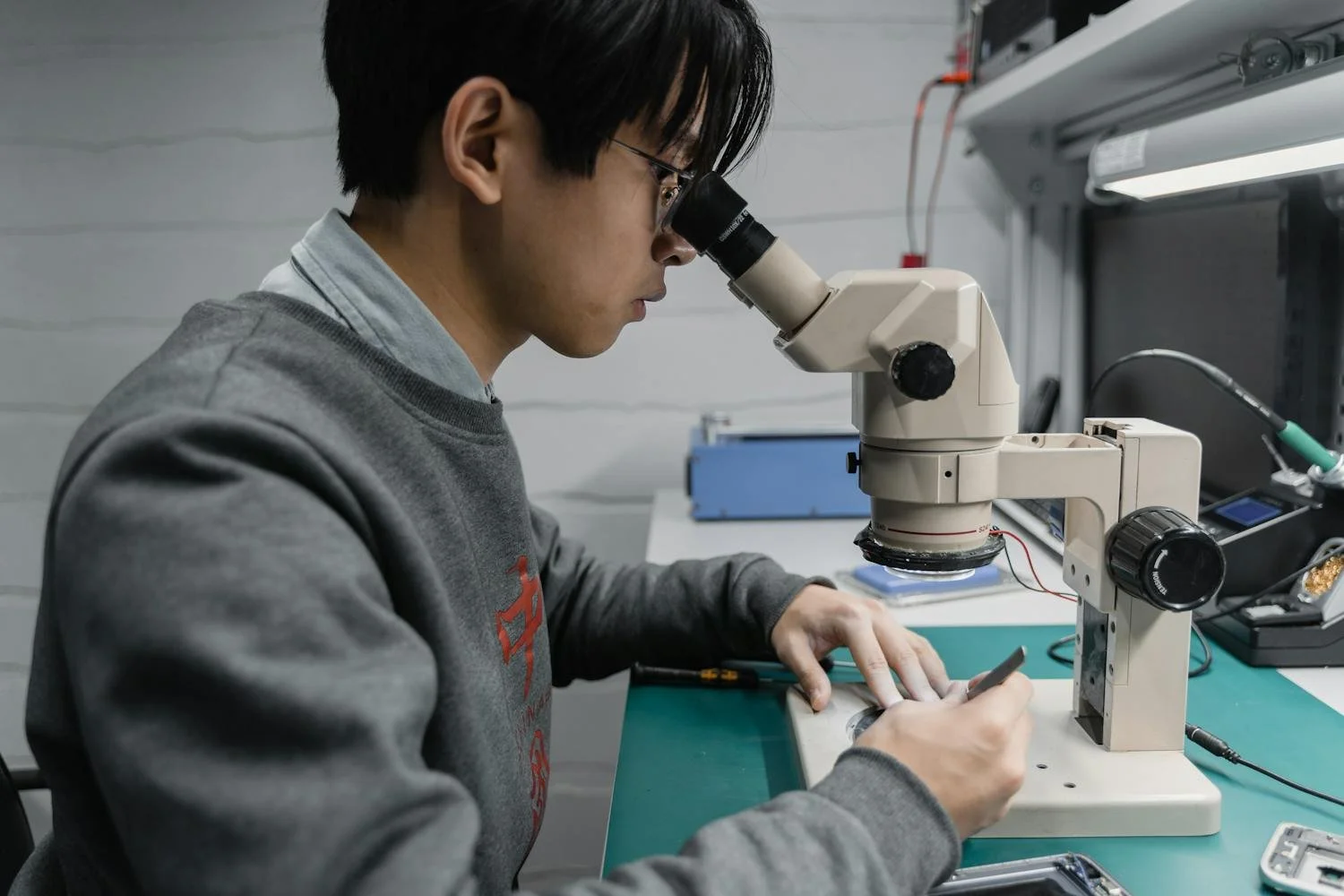
One of the most important skills in any STEM field is the ability to notice small details. In biology, this begins under the lens of a microscope. When a student looks at a slide of onion skin cells, they are learning how to distinguish between the cell wall, the nucleus, and the cytoplasm. This is more than just a drawing exercise; it is training the brain to look past the surface and identify the specific components that make a system function.
Precision in observation is what allows an engineer to spot a tiny flaw in a bridge design or a programmer to find a single wrong character in thousands of lines of code. By spending time in a biology lab, you are practicing the patience and focus required to gather high quality data. If you miss a small detail in a biology experiment, your results will not make sense. This immediate feedback helps students understand that in science, every small piece of information matters.
2. Mastering Data Analysis and Messy Variables
Unlike physics or chemistry, where experiments often happen in very controlled environments, biology is "messy." Living things do not always follow the rules, and variables like temperature, light, and humidity can change your results in unexpected ways. This makes biology the perfect training ground for data analysis. Students have to learn how to use statistics to figure out if their results are actually significant or if they just happened by chance.
Dealing with this variability is a core STEM skill. When you calculate the growth rate of a bacterial population using the formula Nₜ = N₀eʳᵗ, you are using math to describe a living process. Understanding that data is rarely perfect prepares students for the real world of research and development. It teaches them to be skeptical, to look for errors, and to communicate their findings with honesty and clarity.
3. Systems Thinking: How Parts Build a Whole
Biology is the study of systems within systems. A cell is a system made of organelles; an organ is a system made of cells; and an ecosystem is a system made of many different species. Understanding how these layers interact is called "systems thinking." For example, when you study homeostasis, you learn how the body uses feedback loops to keep its internal temperature stable. This is the exact same logic used in mechanical thermostats and computer cooling systems.
When a student masters the concept of a feedback loop in a biology class, they are learning a logic that applies to engineering and economics. They learn that changing one small part of a system can have huge effects on everything else. This "big picture" thinking is what allows STEM professionals to solve complex problems like climate change or urban planning. Biology teaches you that nothing exists in isolation; everything is connected through a web of cause and effect.
4. The Scientific Method as a Problem Solving Tool
Every STEM field relies on the scientific method, and biology is usually where students learn to use it most effectively. It starts with a question, leads to a hypothesis, and ends with a tested conclusion. In biology, you might wonder if a certain type of fertilizer helps a plant grow taller. To find out, you have to design a "controlled experiment" where only one thing changes. This teaches you how to isolate variables, which is a vital skill for anyone who wants to debug software or troubleshoot a mechanical engine.
The most important lesson of the scientific method is that "failure" is just a new type of data. If your hypothesis is wrong, you have still learned something valuable. This builds a mindset of persistence and curiosity. Instead of being afraid of mistakes, biology students learn to use those mistakes to improve their next experiment. This resilience is what keeps scientists and engineers going when a project gets difficult.
5. Understanding the Ethics of Technology and Innovation
Modern biology is no longer just about observing nature; it is about changing it. With technologies like CRISPR and genetic engineering, we now have the power to edit the code of life itself. This introduces a very important part of STEM: ethics. Biology students must grapple with questions about what we should do, not just what we can do. Understanding the social and ethical impact of technology is what separates a great scientist from a good one.
By discussing these topics in class, students learn to think about the long term consequences of innovation. Whether they go on to design medical devices or artificial intelligence, they will carry that sense of responsibility with them. Biology bridges the gap between technical skill and human impact, ensuring that the next generation of STEM leaders is focused on making the world a better and safer place.
6. Why Biology is the Foundation for Advanced STEM
If you want to study medicine, bioengineering, or environmental science, biology is your literal foundation. But even for fields like computer science, biology is becoming more relevant. Fields like bioinformatics and neural mapping use biological principles to build better computer algorithms. The structure of the human brain is the inspiration for "neural networks" in artificial intelligence. Without a solid understanding of biological systems, these advanced technologies would not exist.
Mastering biology early on makes the transition to harder sciences like chemistry and physics much smoother. Many of the chemical reactions you learn about, like cellular respiration, are easier to understand when you have already seen them in a biological context. The equation for photosynthesis, 6CO₂ + 6H₂O + light —> C₆H₁₂O₆ + 6O₂, is a perfect example of how chemistry and biology work together to sustain life.

7. When to Seek Help from a Biology Tutor
Biology can be overwhelming because of the massive amount of vocabulary and the complexity of the diagrams. If you find yourself spending hours trying to memorize the steps of the Krebs cycle or the stages of mitosis without understanding how they fit together, it might be time to look for help. A Biology tutor can help you cut through the "noise" and focus on the core concepts that actually matter for your exams.
Because biology is a cumulative subject, falling behind in the first few months can make the rest of the year a struggle. A Biology tutor provides a personalized space where you can ask the "silly" questions that you might be afraid to ask in class. They can provide you with new ways to visualize the material, turning a wall of text into a clear mental image. If the subject starts to feel like a chore rather than a discovery, a tutor can help bring back the spark of curiosity.
8. How Biology Tutoring Strengthens STEM Performance
While classroom learning is great for the basics, Biology Tutoring focuses on mastery and application. A tutor can help you connect your biology lessons to your other math and science classes, creating a more cohesive understanding of STEM as a whole. They can also help you prepare for the specific types of questions found on AP exams or college entrance tests, which often require you to apply your knowledge to new and unfamiliar scenarios.
| Without a Biology Tutor | With a Biology Tutor |
|---|---|
| Struggles to connect vocabulary, diagrams, and concepts | Tutor helps link terms, processes, and visual diagrams into a cohesive understanding |
| Difficulty analyzing lab data and writing reports | Tutor guides step-by-step analysis and teaches professional lab report writing |
| Math and statistics in biology feel confusing | Tutor provides support with calculations in genetics, population studies, and experimental data |
| Low confidence on exams and AP-style questions | Tutor teaches exam strategies, practice tests, and techniques for complex free response questions |
| Risk of falling behind in cumulative material | Tutor provides targeted support and keeps students on track throughout the course |
At Stemly Tutoring, we specialize in helping students navigate the complexities of life sciences, ensuring they build the foundational skills necessary for a bright future in any STEM career.
9. FAQs
Q1: Is biology easier or harder than chemistry and physics? It depends on your strengths. Biology requires more reading and understanding of systems, while physics and chemistry are more math heavy. Many students find biology easier to visualize because it deals with things they can see in the real world.
Q2: How do I memorize all the vocabulary in biology? Do not just memorize! Try to learn the "roots" of the words. For example, "photo" means light and "synthesis" means to make. If you know the parts of the word, you can often figure out the definition without a dictionary.
Q3: Does biology count for college STEM requirements? Yes! Biology is a core lab science. Doing well in Honors or AP Biology shows colleges that you have the discipline and the analytical skills needed for a rigorous technical degree.
10. Next Steps
Building foundational STEM skills through biology can make or break your future science career; but with the right approach and a curious mind, it is a journey that is incredibly rewarding.
Start by practicing your observation skills, linking your lessons to real world systems, and not being afraid of the math involved in living things. If you are serious about mastering these concepts and ensuring you are ready for advanced STEM courses, professional support can make all the difference.
At Stemly Tutoring, we help students see the "why" behind the science, solve complex problems, and build the confidence to succeed in any lab or classroom.
👉 Book a free consultation today to work with a Biology tutor who can help you turn difficult chapters into clear discoveries and set the foundation for your STEM success.